From lesson 1 · Why your chord buzzes
Why does my chord buzz?
Press with your fingertips, close to the fret. Keep your fingers curved so they do not touch the next string.

I'm Wilson. I played in club bands for twenty-five years and have taught adult beginners for fifteen. Each short lesson answers one question, like why a chord buzzes.
Press with your fingertips, close to the fret. Keep your fingers curved so they do not touch the next string.
What beginners ask me most, answered short. The full fix is in the lesson each comes from.
Practise the change alone, without strumming. Then add one slow strum at the end.
Usually not. Press just enough to stop the buzz, and let your thumb rest behind the neck.
Ten focused minutes beat an hour once a week. Stop while you still want to play.
Move from the elbow with a loose wrist. Keep the hand moving in time, even when you miss the strings.
Free on YouTube, one question each. Start with lesson 1 if you've just bought a guitar.

Three small fixes for your fretting hand that clear most buzzing.

Play G, C and D slowly, and join them into one simple song.

Move one finger at a time and keep the strum going.
Free guide
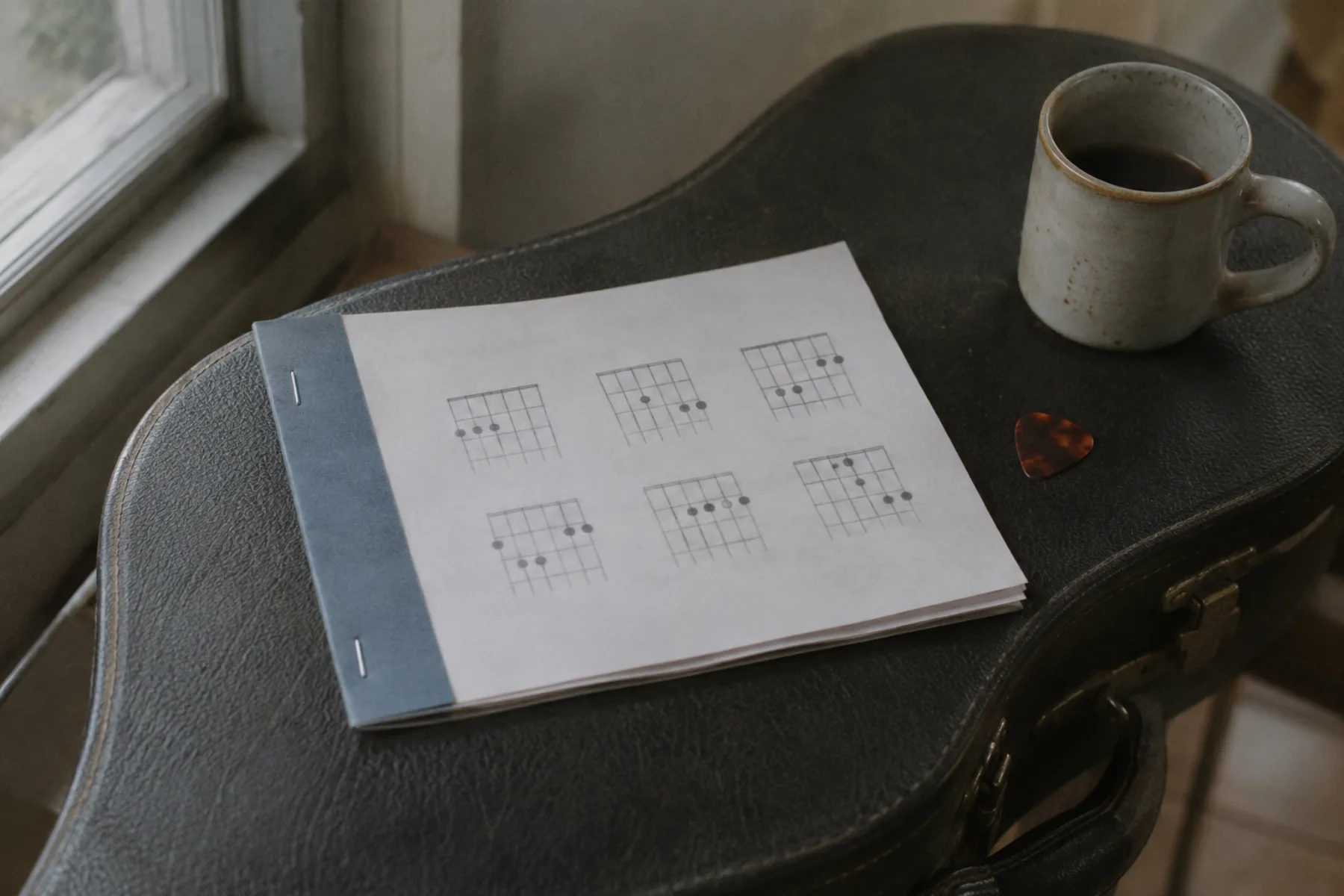
My free chord pack: eight beginner chords with finger pictures, four strumming patterns and a weekly practice chart. It comes with my first letter.
Printable sheets to keep on the music stand, and the tee I teach in.



Who's teaching you
I played guitar in Seattle club bands for twenty-five years, and I've taught grown-ups to play for fifteen, first in a back room and now online.
My lessons are short and slow. Each one answers a single question, the kind every beginner asks, and shows the fix slowly enough to copy.